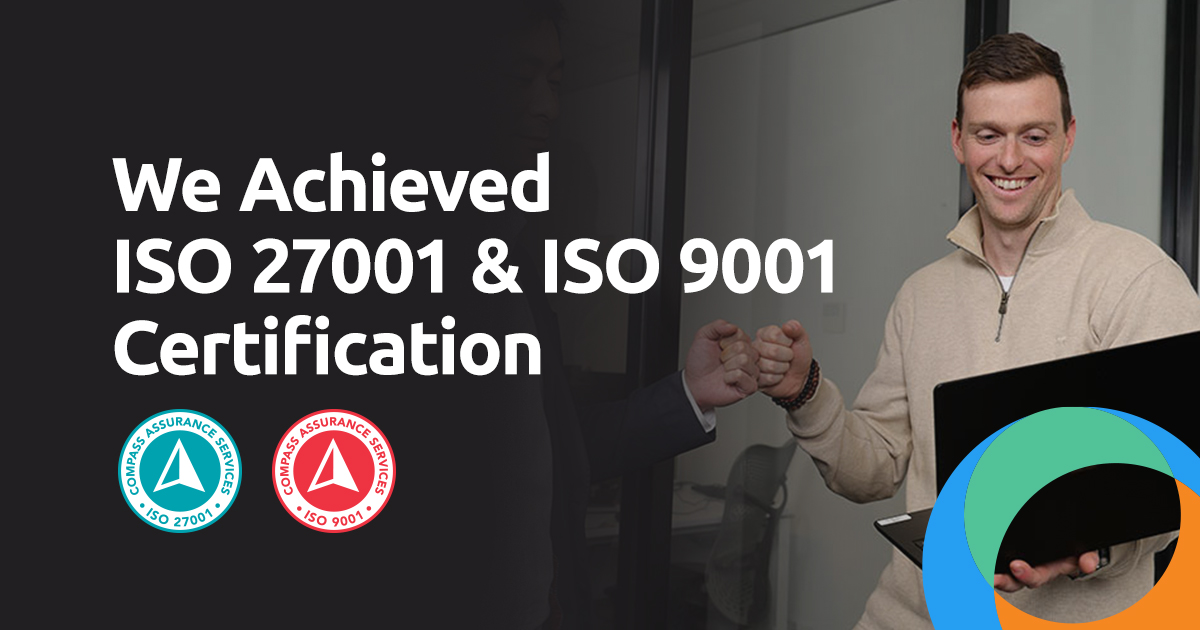
Through no small amount of hard work, Unified IT has achieved certification against two of the most recognised international standards in information security and quality management. Earning both ISO 27001 and ISO 9001 certifications has been a significant undertaking for the Unified IT team, reflecting the genuine commitment to improving how this business operates.
For clients and prospective partners, it means something increasingly rare. An IT provider whose security practices and service standards have been independently verified, not just self-proclaimed.
ISO 27001: The international gold standard for information security
This certification is the international standard for information security management systems and is not an easy feat to attain. Achieving certification means an organisation has demonstrated that it has systematic controls in place to protect sensitive information, manage security risks, and respond effectively when things go wrong.
For a managed IT provider, this matters more than most. Unified IT holds access to client systems, data, and infrastructure across dozens of businesses. ISO 27001 certification provides formal assurance that this access is governed by defined security policies, regular risk assessments, and controls built around confidentiality, integrity, and availability of data.
For clients operating in regulated industries such as legal, finance, or healthcare-adjacent sectors, this certification also supports their own compliance obligations. Knowing your IT provider holds ISO 27001 is increasingly a requirement, not just a reassurance.
ISO 9001: The global benchmark for quality management
Working hand in hand with the very best information security standard is the international standard for quality management systems. This certification is all about consistency, reliability, and continuous improvement in how a business delivers its services.
Certification requires that an organisation has clearly defined processes, measurable performance standards, and a structured approach to identifying and acting on areas for improvement. For Unified IT clients, this translates directly to more consistent service delivery, faster resolution times, and a team that is actively reviewing its own performance rather than assuming everything is fine.
In practical terms, it means fewer surprises, clearer communication, and a provider that holds itself accountable to defined standards rather than subjective ones.
What This Means for Our Clients
Together, ISO 27001 and ISO 9001 certification reflect a business that has invested seriously in how it operates, not just what it offers. These are not credentials acquired easily. The certification process involves independent auditing, documented evidence, and ongoing surveillance to maintain compliance.
For existing clients, this is confirmation that the standards Unified IT holds itself to are externally verified. For businesses evaluating IT providers, it removes much of the guesswork. Due diligence becomes significantly simpler when a provider can point to an internationally recognised certification rather than self-reported capability.
Unified IT acknowledges the support of ISO365 throughout the certification process. Their guidance was instrumental in navigating the requirements of both standards and reaching this milestone. More information about ISO365 and their work can be found at iso365.com.au